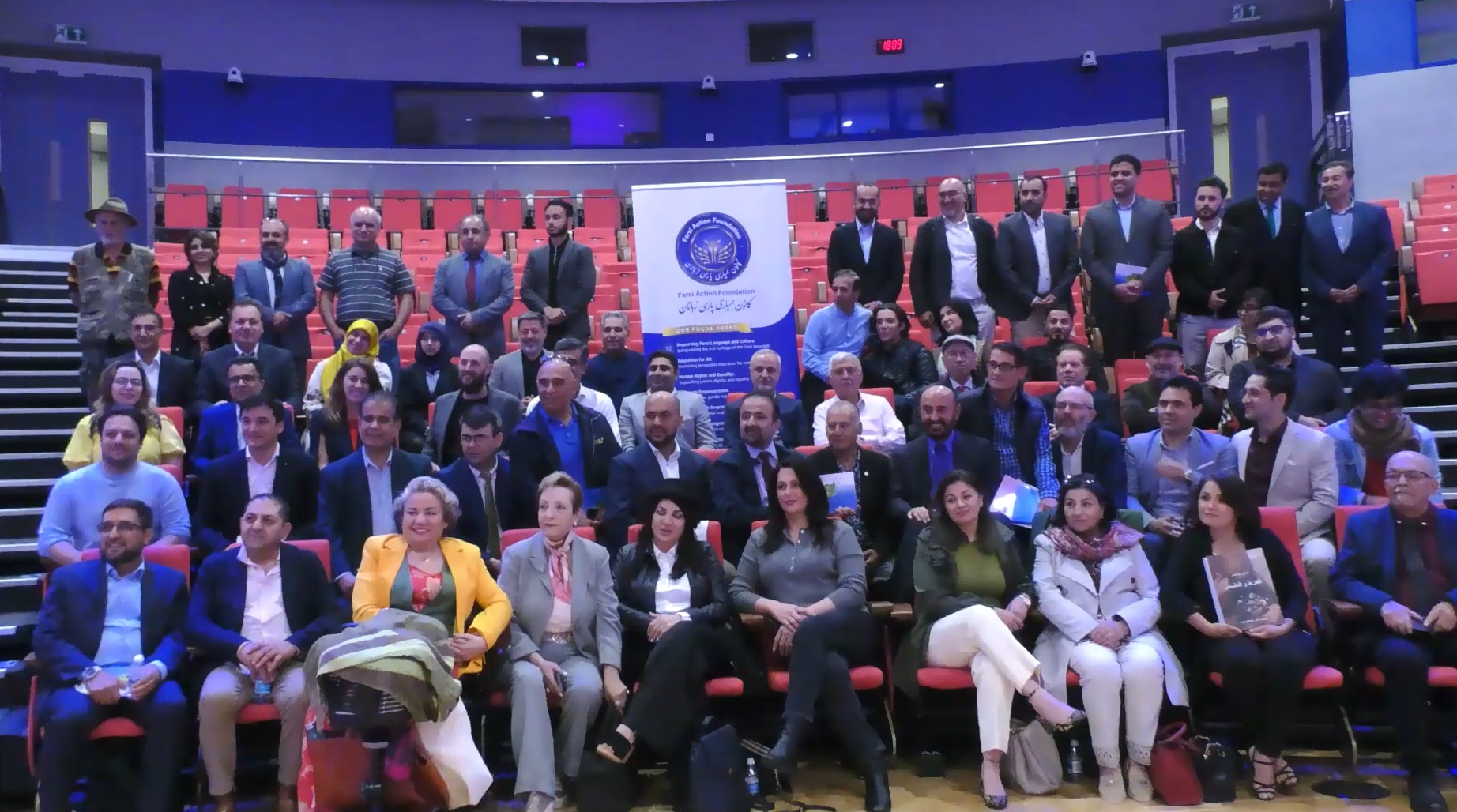
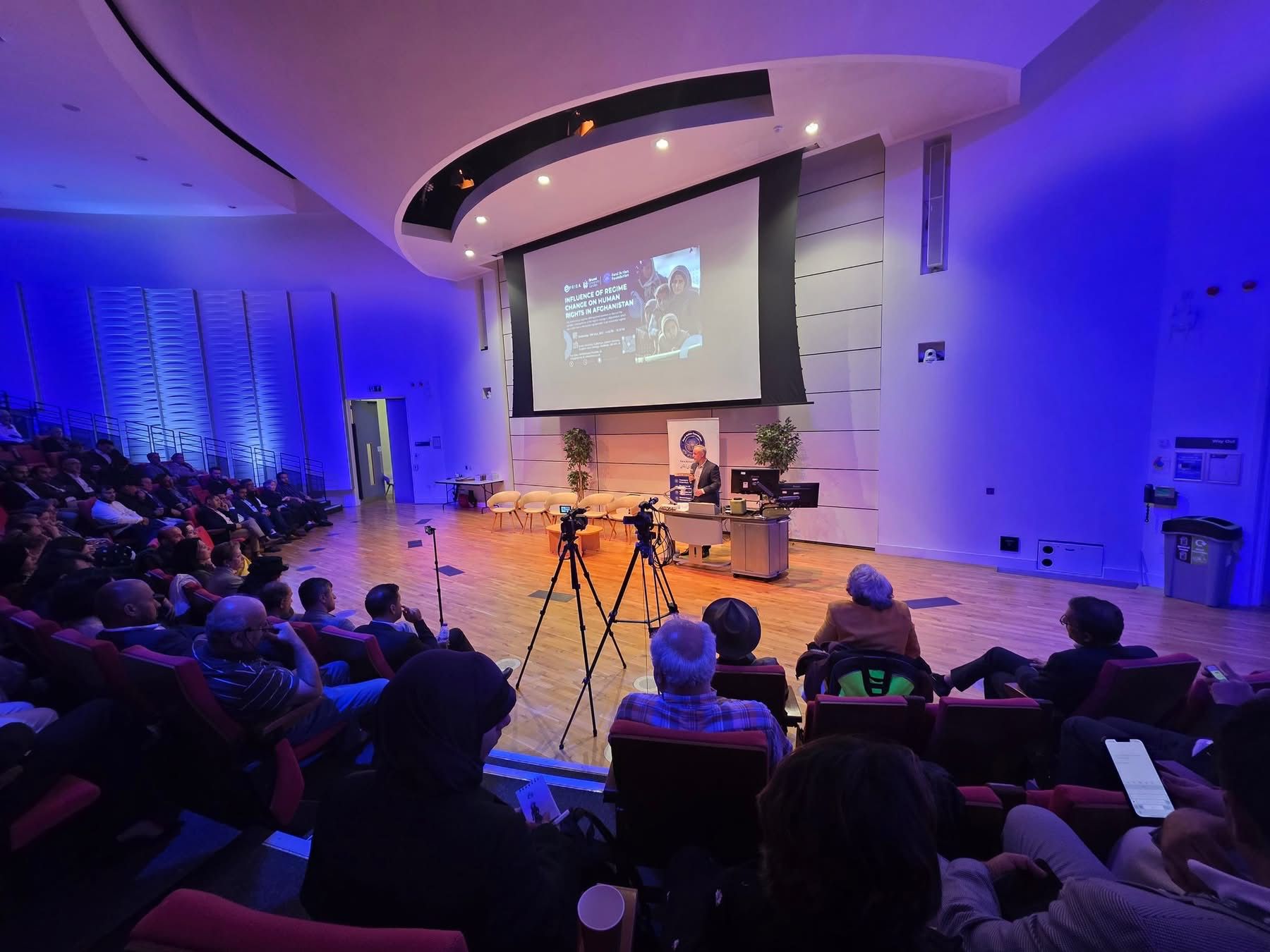
The Farsi Action Foundation, in collaboration with the Policy Research Institute for South Asia (PRISA) and the Brunel University Research Centre, successfully hosted an international conference on “The Influence of Regime Change on Human Rights in Afghanistan, South Asia, and the Globe” on 10 September at the Brunel University Auditorium Hall.
The event opened with welcome remarks and a brief introduction by Dr. Luke Heslop of Brunel University. This was followed by a Persian cultural interlude featuring traditional music performed on the naay by Mr. Namdar and on the daf by Mr. Said.
The conference was moderated by Professor James Staples, who introduced an esteemed panel of speakers:
Professor Magnus Marsden, Head of the Anthropology Department, University of Sussex
Dr. Fawzia Koofi, former Member of Parliament of Afghanistan, politician, and human rights activist
Mr. Zia Saraj, former Head of Afghanistan’s National Directorate of Security and Visiting Professor, King’s College London
Dr. Zeshoun Hashim, Managing Director of PRISA
Key discussions included:
Professor Magnus Marsden examined the societal and ethnic impacts of Afghanistan’s regime change and its deepening regional divides.
Dr. Fawzia Koofi highlighted the far-reaching consequences for human rights—particularly women’s rights—stressing that these challenges extend beyond Afghanistan and will affect future generations worldwide.
Mr. Zia Saraj addressed the regional security implications, including the rise of global terrorism and emerging threats to international security.
Dr. Zeshoun Hashim analyzed the political and sociological repercussions of regime change across South Asia, offering potential solutions to regional challenges.
An engaging Q&A session allowed participants to interact directly with the panelists.
Following a refreshment break, the second session featured the launch of a newly published book, A Scientific–Practical Solution to Afghanistan’s Ethnic & Structural Crisis, presented by Dr. Dade Khuda Dagi of the Aga Khan University, London. The book’s author, Dr. Abdul Khaliq Lalzad, then delivered a detailed presentation, emphasizing the historical roots of Afghanistan’s ethnic tensions and advocating for structural reforms to prevent future regime collapses.
After Dr. Lalzad’s presentation, Dr. Umar Farooq, Chairman of the Board of Trustees of PRISA, addressed the audience, outlining the ongoing threats facing the region and expressing gratitude to all participants for their engagement and contributions.
This was followed by Mr. Jamal Haidari, who spoke on behalf of the Farsi Action Foundation. He highlighted the organisation’s collaborative work with PRISA and the Brunel University Research Centre, expressed appreciation for the attendees’ active participation, and announced plans to organise further joint events and conferences in the near future.
The conference concluded with a vibrant performance by a group of Persian musicians, celebrating cultural heritage and dialogue.
This landmark event reinforced the importance of collaborative scholarship and cross-cultural engagement in addressing human rights issues that resonate far beyond Afghanistan.